
Jump to topic
Search
Program Details
Penn State Health’s Emergency Medicine Residency has many advantages for the emergency physician in training:
- Penn State Health Milton S. Hershey Medical Center is a large academic teaching hospital — the only combined Level 1 adult and pediatric trauma center in the state.
- The emergency department sees more than 75,000 visits per year; 19,000 are pediatric patients. With high patient acuity and a wide variety of complaints, residents are provided with an exceptional and well-rounded exposure to both common and rare pathologies.
- The emergency department includes more than 60 patient treatment areas. There are resuscitation bays, an ED observation unit, an area of patients with less severe illness or injuries, as well as a recently expanded pediatric emergency department.
- Life Lion air and ground EMS services provide both 911 and critical-care transport for the local community and greater central Pennsylvania region. All residents are trained in providing medical command, and senior residents take medical command calls in the department under faculty supervision. Residents and faculty also provide event coverage at Beaver Stadium in State College, Pa., for home Penn State football games.
- The department uses up-to-date technology, including a completely electronic integrated medical record; an electronic patient tracking system to assess throughput and optimize patient care; computerized order entry, charting and result-viewing; a digital radiology system; select point-of-care laboratory testing; and point-of-care ultrasound. Residents and staff use a wireless telephone system so they are never tied to a phone.
Learn More about the Residency
General Application Information
Penn State College of Medicine participates with ERAS and the NRMP Match. All application material must be submitted through ERAS.
Application deadline is Jan. 1. Applicants are invited to check the status of their application by emailing through MyERAS. All correspondence regarding applications should be conducted through MyERAS to avoid delays.
All interviews are by invitation only and applicants will receive further communication via email from Thalamus. Virtual interviews will be conducted via Thalamus.
Application Requirements
The completed ERAS application form should include:
- Dean’s letter/MSPE
- Medical school transcripts
- Letters of recommendation/SLOEs
- Personal statement
- Medical examination score (USMLE Step 1 or COMLEX Step I)
The NRMP requires all interviewees to receive a copy of the Resident Agreement. The current resident agreement can be found here.
Important dates
- January 1, 2024: Application deadline
- February 28, 2024: Rank list deadline
- March 15, 2024: Match results released
Selection and Interview Process
Interviews are granted to outstanding candidates following receipt of a complete ERAS application. Applications are released to programs and will be reviewed starting Sept. 27, 2023. Applicants are encouraged to start this process early. Candidate’s ERAS application and preference signaling list should ideally be completed by this date and will be reviewed on rolling basis throughout the remainder of the interview season.
The program will begin offering interviews the first week in October and continue to offer interviews on a rolling basis throughout the interview season. The first interview date is Tuesday, Oct. 17, and subsequent interview dates take place on Tuesdays in October, November, December and through January 12. The program will arrange a virtual social hour with current residents 1-2 times per month. Optional in-person second looks will be held throughout the interview season.
Your decision to participate in a second look will have no bearing on the program’s rank order list decisions. The dates will be shared with the invited interview applicants only.
During the interview day, applicants will interview the program director, faculty members and residents.
If you should need to cancel an interview, the program wishes you all the best on your journey and asks that you inform it at least a week (7 days) before your scheduled interviews so the spot can be filled with another fantastic candidate!
Visiting Medical Students
Visiting medical students interested in completing an away rotation in Penn State Health’s emergency department should apply through VSLO.

Virtual Tour
Penn State Health
Penn State Health is a multi-hospital health system serving patients and communities across 29 counties of Pennsylvania. Its mission is to improve health through patient care, research, education and community outreach.
In December 2017, the system partnered with Highmark Health to facilitate creation of a value-based, community care network in the region. The shared goal of Highmark and Penn State Health is to ensure patients in the community are within:
- 10 minutes of a Penn State Health primary care provider
- 20 minutes of Penn State Health specialty care
- 30 minutes of a Penn State Health acute care facility
Learn more about Penn State Health
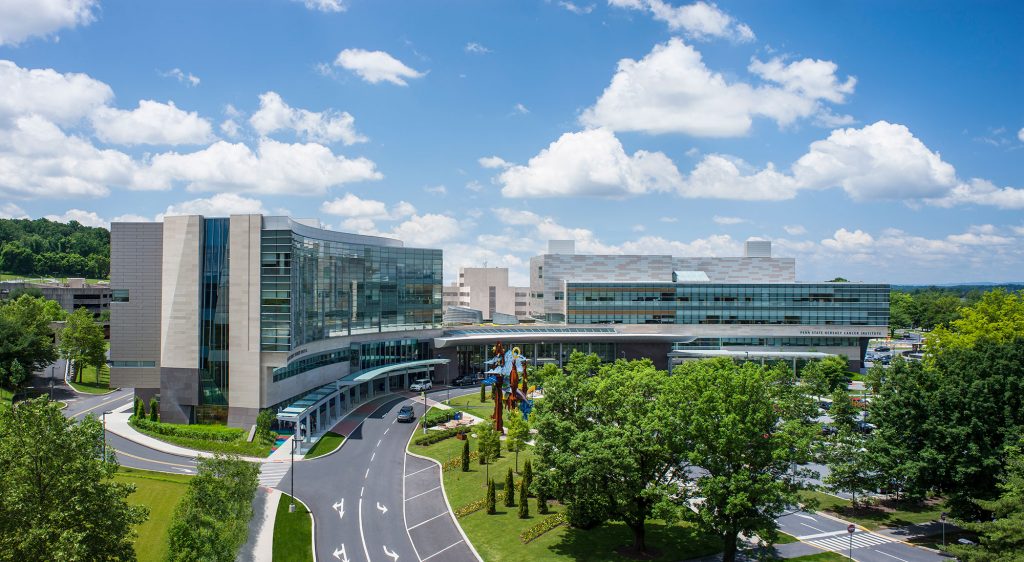
Penn State Health Children’s Hospital (left), Penn State Health Milton S. Hershey Medical Center (center) and Penn State Cancer Institute (right)
Penn State Health Milton S. Hershey Medical Center
500 University Dr., Hershey, Pa., 17033 (Derry Township, Dauphin County)
- The health system’s 647-bed flagship teaching and research hospital
- The only medical facility in Pennsylvania accredited as both an adult and a pediatric Level I (highest-level) trauma center
- Dedicated surgical, neuroscience, cardiovascular, trauma and medical intensive care units
- Accredited Life Lion critical-care transport providing more than 1,100 helicopter and approximately 750 ground ambulance transports per year
- More than 1,300 faculty members and more than 650 residents and fellows
- Approximately 29,000 admissions, 73,000 emergency department visits, 1.1 million outpatient visits and 33,000 surgical procedures annually
- Designated as a Magnet hospital since 2007
Learn more about Milton S. Hershey Medical Center
Penn State Health Children’s Hospital
600 University Dr., Hershey, Pa. 17033 (Derry Township, Dauphin County)
- An eight-story, 263,000-square-foot-facility built in 2013 and expanded in 2020
- 146 licensed pediatric beds, 18 acute care beds and a 56-bed neonatal intensive care unit
- Level IV (highest-level) neonatal intensive care unit
- Level I quaternary (highest-level) pediatric intensive care unit
- Level I (highest-level) pediatric trauma center designation
- Intermediate care unit
- Dedicated pediatric operating rooms
- More than 150,000 pediatric outpatient visits and approximately 5,000 pediatric patient discharges annually
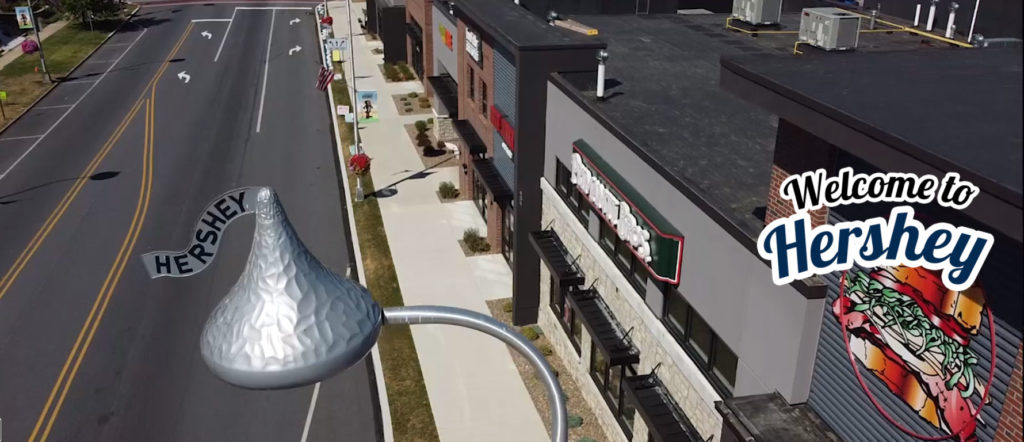
Welcome to Hershey
More About Hershey
Interested in learning more about living and working in Hershey, Pa.? See details here:
- Benefit and stipend information
- Virtual tour
- GME policies
- Wellness resources
- More about Penn State Health and its locations
- Application and visa requirements
Program-Specific Benefits
Trainees in the Emergency Medicine Residency get three weeks of vacation each year; during a vacation block, they work a reduced number of clinical shifts.
In addition, PGY-3 residents are given additional time to attend the national American College of Emergency Physicians scientific assembly.
Wellness, including emotional, spiritual, social and physical health, is a crucial component to training and to becoming a professional, compassionate and resilient physician. Self-care is a skill which must be continually practiced and reinforced. Penn State College of Medicine and Penn State Health are committed to addressing wellness among residents and fellows, with multiple resources readily available.
Institutional resources
- Visit BeWell – a health program designed to support Penn State Health employees
- See Penn State College of Medicine wellness resources here
- Employee Health Care Concierge and Case Management Service
- Partners in Medicine
Moving to a new city with your family does not have to be stressful. Our residency program has assisted many significant others with finding employment. There is also a GME-Wide Partners in Medicine (PIM) group that offers networking opportunities as well as various social and community oriented activities. - The Doctors Kienle Center for Humanistic Medicine
Graduate medical education resources
Institutional Resources
Penn State Health and Penn State College of Medicine celebrate, embrace and support the diversity of all patients, faculty, staff, students and trainees.
Office for Diversity, Equity and Inclusion
In keeping with this, Penn State Health has an active Office for Diversity, Equity and Inclusion with various programs, networks and resource groups, including:
- Talks and lectures on diversity, equity and inclusion through the Inclusion Academy
- Regular events on topics such as eradicating racism and creating a culture of inclusiveness
- Many Business Employee Resource Groups (BERGs), including:
- Disability Business Employee Resource Group
- Interfaith Business Employee Resource Group
- LGBTQ+ Business Employee Resource Group
- Military and Veterans Business Employee Resource Group
- Multicultural Business Employee Resource Group
- NextGen Business Employee Resource Group
Learn more about the Penn State Health Office for Diversity, Equity and Inclusion
Learn more about the College of Medicine’s Office for Diversity, Equity and Belonging
Office for Culturally Responsive Health Care Education
The vision at Penn State College of Medicine and Penn State Health is to equip learners with the knowledge, skills and attitudes they will need to provide culturally excellent health care and research for an increasingly diverse U.S. population. The Office for Culturally Responsive Health Care Education was formed to help meet that goal.
Learn more about the Office for Culturally Responsive Health Care Education
Office for a Respectful Learning Environment
In addition, the institution does not tolerate discrimination, biases, microaggression, harassment or learner mistreatment of any kind, and any concerns are immediately addressed by the Office for a Respectful Learning Environment.
Learn more about the Office for a Respectful Learning Environment
Network of Under-represented Residents and Fellows
The Network of Under-represented Residents and Fellows (NURF) is a group of diverse residents and fellows representing all specialties. NURF’s goal is to promote cultural diversity in the residency programs through community involvement, mentorship with diverse faculty, professional networking and support for the recruitment of diverse medical students into the residency programs.
NURF is sponsored by the Penn State College of Medicine Graduate Medical Education Office and the Penn State Health Office for Diversity, Equity and Inclusion.
Curriculum Details
A dedicated period of orientation for new interns begins upon their arrival in July. All new emergency department interns will work a reduced number of clinical shifts and participate in a variety of labs, simulations and orientation activities to help in the transition from senior medical students to functioning emergency medicine interns.
In addition, all new interns will become certified in advanced cardiac life support (ACLS), advanced trauma life support (ATLS) and pediatric advanced life support (PALS).
Longitudinal Pediatric Exposure
In order to be exposed to the full breadth that is pediatric emergency medicine, residents in the program have a longitudinal exposure to pediatric patients throughout all three years of their training.
Emergency medicine residents start seeing children from the beginning of their training and can expect to see children on nearly every shift. Residents are also scheduled for dedicated shifts with pediatric emergency medicine faculty.
Ultrasound
Residents participate in an ultrasound course during their orientation to the department. Afterward, they are encouraged to use ultrasound each and every shift. The ultrasound director reviews all of the studies, grades them and offers teaching points when appropriate. The residents have a two-week ultrasound rotation during the second year to further hone and develop their skills.
Community Emergency Medicine Experience
During the second year of residency, students rotate through UPMC Pinnacle Harrisburg, approximately 12 miles from Penn State Health Milton S. Hershey Medical Center. This clinical environment exposes residents to an urban and community-based patient population, which is distinctly different from that of Hershey Medical Center.
Critical-Care Experience
Interns rotate through the medical intensive care unit at Penn State Health Milton S. Hershey Medical Center, and frequently encounter critically ill patients on their cardiology rotation as well. Second-year residents rotate through the surgical anesthesia intensive care unit and the pediatric intensive care unit. In PGY-3, residents rotate through the medical intensive care unit at UPMC Pinnacle Harrisburg.
Overview
- Emergency department – seven blocks
- Anesthesia – one block
- Cardiology – one block
- Medical intensive care unit – one block
- Obstetrics and gynecology – one block
- Orthopaedics – one block
- Trauma surgery – one block
Emergency Department
Seven blocks are spent in the emergency department during the PGY-1 year, including the first block in July, which is dedicated to orientation. Residents become accustomed to patient care as well as their role in the department. Emergency department blocks are balanced with off-service rotations throughout the year.
Anesthesia
This rotation focuses on the perioperative airway and anesthetic management of patients undergoing surgery. Residents work under the direct supervision of an anesthesiologist. Responsibilities include performance of pre-operative history and physical examination, induction and maintenance of anesthesia, airway and ventilator management, intra-operative monitoring and post-operative evaluation.
Cardiology
This rotation is shared between both the acute cardiology and the congestive heart failure services. Residents become familiar with the acute and daily management of common and uncommon cardiac issues.
MICU
The Medical Intensive Care Unit is a busy, high-acuity rotation, where residents stabilize and manage a large variety of pathologies, including more common conditions as well as more complex cases infrequently seen outside of an academic teaching facility.
Obstetrics and Gynecology – UPMC Pinnacle Harrisburg
The Obstetrics and Gynecology rotation is completed at UPMC Pinnacle Harrisburg. During this rotation, residents familiarize themselves with the stages of labor and delivery, and participate in both uncomplicated and occasionally complicated deliveries.
Orthopaedics
The orthopaedics rotation focuses on the evaluation and management of musculoskeletal complaints. Residents work under the supervision of emergency department faculty, as well as working in conjunction with the orthopaedics team. Residents learn the necessary elements to complete a detailed musculoskeletal exam, determine any appropriate testing for the complaint involved, perform or assist in relevant procedures, as well as determine management of that complaint.
Trauma Surgery
Each resident will act as a member of the trauma surgery team and participate in the care of patients meeting trauma criteria, with primary emphasis on evaluation, resuscitation and proficiency in procedural skills, as well as post-operative monitoring and care. The resident is supervised by the team leader (senior surgical resident) and trauma faculty.
Overview
- Emergency department – eight blocks
- Emergency department at UPMC Pinnacle Harrisburg – a block and a half
- EMS – one block
- Surgical anesthesia intensive care unit – one block
- Pediatric intensive care unit – one block
- Ultrasound – half a block
Emergency Department
Eight blocks are spent in the emergency department during the PGY-2 year. Residents focus on honing the skills obtained during the PGY-1 year, as well as providing more efficient delivery of patient care. They balance this with new skills expected of a senior resident, such as taking medical command calls, coverage for trauma airways, and supervision and teaching of medical students and junior residents.
Emergency Department – UPMC Pinnacle Harrisburg
Six weeks are spent in the emergency department of Harrisburg Hospital, part of Pinnacle Health System. This is an urban community hospital in Harrisburg, Pa. The rotation is designed to expose residents to all types of patients presenting to a non-academic, non-tertiary-care emergency department.
EMS
The PGY-2 EMS rotation is geared toward educating the resident about the structure and function of EMS and the role of the emergency physician in interacting with pre-hospital providers. The resident will work under the direct supervision of the attending physician or senior health care provider (RN or paramedic) on scene.
Surgical Anesthesia Intensive Care Unit
A rotation at the PGY-2 level in the surgical anesthesia intensive care unit is required of all residents. The rotation is designed to expand the resident’s knowledge base regarding the evaluation and management of the critically ill surgical patient. The resident will spend two weeks on the anesthesia critical care service and two weeks on the surgical critical care service. There is a broad range of pathology seen on either of the two services during this rotation.
Pediatric Intensive Care Unit
The pediatric intensive care unit rotation is required of all residents. The goal of this rotation is to develop the resident’s knowledge base in the evaluation and management of critically ill pediatric patients. The resident oversees a mix of medical and surgical cases, as well as common and uncommon pathologies, while rotating in the pediatric ICU at the nationally ranked Penn State Children’s Hospital.
Ultrasound
All PGY-2 residents have a dedicated two-week ultrasound rotation under the direct supervision of the Department of Emergency Medicine’s ultrasound director. The rotation enhances the resident’s ability for real-time decision-making based on point-of-care ultrasound findings. Preparation for independent practice occurs by furthering residents’ skills in both ultrasound image acquisition and interpretation.
Overview
- Emergency Medicine – 11 blocks
- Elective – one block
- Medical intensive care unit at UPMC Pinnacle Harrisburg – one block
Emergency Department
Eleven blocks are spent in the emergency department during the PGY-3 year. This rotation focuses on refining the clinical skills achieved during the first two years of residency and developing the supervisory and administrative abilities required to manage an emergency department. Residents learn the logistics of running a busy department, including the elements of throughput, staffing and efficiency. They continue to supervise medical students and assist junior residents, in addition to managing their own patients, all in preparation for independent practice.
Medical Intensive Care Unit – UPMC Pinnacle Harrisburg
This rotation occurs in the medical intensive care unit at UPMC Pinnacle Harrisburg. This rotation provides an opportunity for the resident to further their skills in the evaluation and management of multiple critically ill medical and surgical patients, but at a community hospital with a different patient population and varying pathology.
Elective
All residents have a four-week elective rotation in their PGY-3 year. Residents may arrange an elective within the Penn State Health system, or may gather information on an outside rotation and apply for approval through the GME office.
Shifts are nine hours long, with the final hour focused on patient disposition and transitions of care. Interns typically work 21 shifts in a four-week block, with decreasing numbers of shifts in each subsequent year of residency.
There is also a clinical shift reduction for blocks containing vacation weeks.
Conference
Every Wednesday from 8 a.m. to 1 p.m., residents have protected time and will attend conference. Didactic material is provided in a variety of formats.
Fellowship
The department also sponsors an Emergency Medical Services Fellowship for those seeking to further their training as emergency physicians.
Research
Multiple opportunities for research exist depending on the resident’s interest. Dedicated departmental support for resident research is available. Every resident is expected to complete a scholarly activity project during training.
Simulation
The Emergency Medicine Residency incorporates three or more hours of simulation into almost every month of the conference schedule. Residents also have independent access to the Clinical Simulation Center; some areas are open 24/7.
Resident Honors and Recognitions
Penn State College of Medicine and Penn State Health Milton S. Hershey Medical Center accept ongoing nominations for the Exceptional Moments in Teaching award.
The award, given monthly by the Office for a Respectful Learning Environment, accepts nominations from College of Medicine students who are invited to submit narratives about faculty members, residents, fellows, nurses or any other educators who challenge them and provide an exceptional learning experience. See more about the award here.
Previous nominees from the Emergency Medicine Residency are listed here. Click the + next to a nominee name to read their nominator’s comments.
The annual Resident/Fellow Research Day is held each year (with exception of during the COVID-19 pandemic) on and around the Penn State Health Milton S. Hershey Medical Center campus.
The intent of the event is to provide an opportunity for residents and fellows to showcase their research accomplishments to their peers in other clinical departments, as well as their colleagues in the basic sciences.
Learn more about Resident/Fellow Research Day here.
Previous presentations from the Emergency Medicine Residency are listed here.
Latest News from Emergency Medicine

Program Leadership
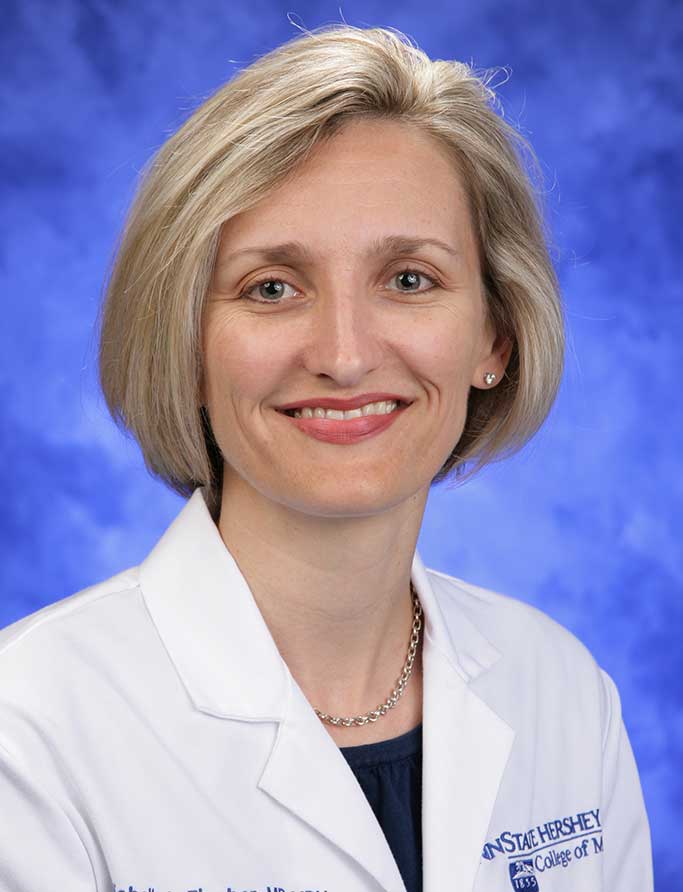
Michelle Fischer, MD, MPH
Program Director
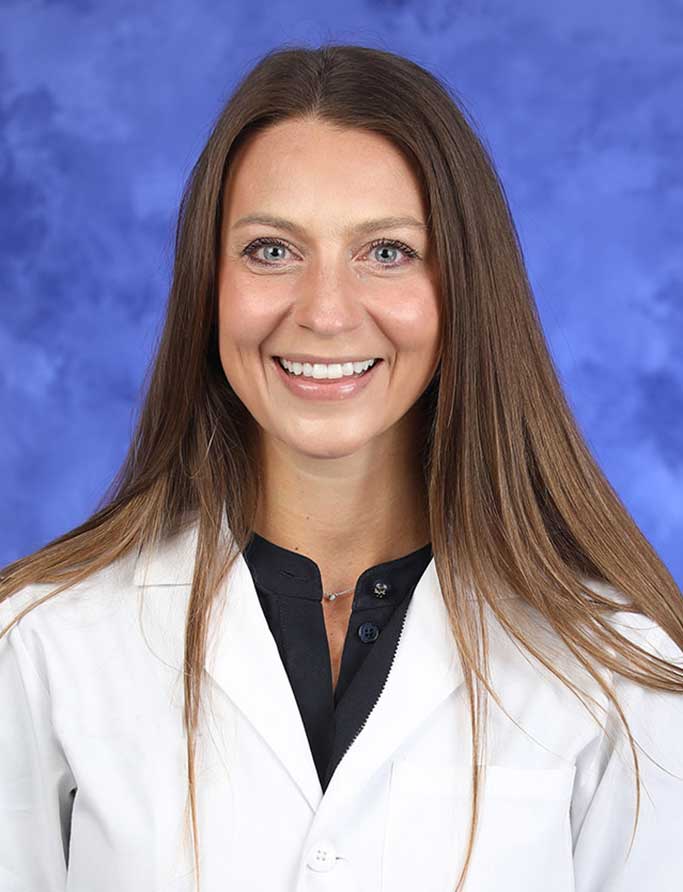
Alexandra Lambert, DO, MPH
Associate Program Director